Nyepi, Galungan and the Temple Calendar: When Uluwatu Closes
In short
Bali runs two calendars alongside the Gregorian one, and both affect a visit to Uluwatu. Nyepi, in March, closes the entire island for 24 hours — airport included — and no trip runs. Galungan and the temple's own piodalan move on a 210-day cycle, so they land on different dates every year and make the site busy and beautiful rather than closed.
Why Bali's dates move
Two systems are in use at once. The saka calendar is lunar and sets Nyepi, which lands in March. The pawukon calendar runs in a cycle of 210 days and sets Galungan, Kuningan and every temple's own anniversary.
Neither lines up with the Gregorian year, which is why a festival you read about happening in June is in a different month next time. It is also why a temple anniversary can fall twice in one calendar year and not at all in another.
What happens on Nyepi?
Everything stops. For twenty-four hours from six in the morning, the whole island observes silence: no vehicles on the roads, no flights in or out of Ngurah Rai, no shops open, no work, no travel. Visitors stay inside their hotel grounds for the full day. In recent years the mobile carriers have switched off data as well.
Pura Luhur Uluwatu is closed, no performance is staged, and every trip listed here is cancelled. This is not a reduced service; it is a complete stop, and it is enforced by community wardens called pecalang.
Should you avoid Bali at Nyepi?
Not necessarily. The day before is Ogoh-Ogoh, when villages parade enormous demon effigies through the streets after dark and then burn them, and it is one of the most extraordinary things on the island's calendar. The day itself, spent in one place with no traffic noise and a sky with no light pollution, is memorable in a completely different way.
What you cannot do is treat it as an ordinary day with a few closures. Plan for a full stop, and get everything you need the day before.
Galungan and Kuningan, and what they change
Galungan marks the victory of dharma over adharma and the return of ancestral spirits to the family home. It runs for ten days and ends with Kuningan. Along every road, tall bamboo poles called penjor arch over the carriageway, and families in ceremonial dress travel to their home temples.
Nothing closes. Temples stay open, tours run and the dance is performed. What changes is traffic and crowding: this is the busiest domestic travel period of the Balinese year, and it lands on the same roads you need. Add time to every journey on the map.
When is Uluwatu's own temple anniversary?
Every 210 days, on the pawukon cycle, which means it comes round roughly every seven months and on a different Gregorian date each time. The ceremony is called a piodalan, and it is the temple's birthday in the sense of the day it was consecrated.
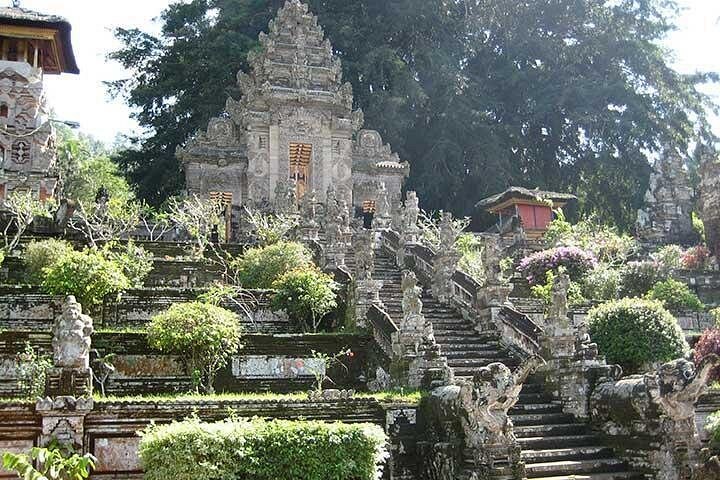
If you happen to arrive on one, the site fills with families in white and gold, there are offerings stacked along the courtyard walls, and the atmosphere is nothing like an ordinary afternoon. Visitors are welcome. Dress properly, stay out of the way of anyone praying, and do not photograph people at prayer without asking.
The two calendars, side by side
| Occasion | Cycle | Falls | Effect on a visit |
|---|---|---|---|
| Nyepi | Saka, lunar | March | Total stop. Island closed, airport closed, no trips run |
| Ogoh-Ogoh | The evening before Nyepi | March | Parades after dark; roads busy, tours end early |
| Galungan | Pawukon, 210 days | Twice in most years | Open and busy; penjor along every road |
| Kuningan | 10 days after Galungan | Twice in most years | Open and busy; heavy local travel |
| Uluwatu piodalan | Pawukon, 210 days | Roughly every 7 months | Open, crowded with worshippers, exceptional to see |
| Full moon (purnama) | Monthly | Monthly | Ceremonies at many temples; more worshippers on site |
What about the full moon?
Purnama, the full moon, brings ceremonies to temples across the island every month, and Uluwatu is no exception. It does not close anything and it is not something to plan around, but it does mean more worshippers on site and a busier outer courtyard than an ordinary afternoon.
If you arrive on one, you are getting a better visit rather than a worse one: offerings along the walls, families in ceremonial dress, and the temple doing the thing it is actually for. The only practical consequence is that the car park fills earlier.
How the temple calendar interacts with the weather
Nyepi lands in March, at the tail of the wet season, which is already the quieter half of the year for visitors. Galungan moves, so it can fall in the dry season peak or in the middle of the rain. Neither is something you can plan a trip around, but both are worth checking against dates you have already chosen.
The month-by-month weather picture, including sunset times, is on weather. If you are choosing between months rather than dates, that page is the more useful of the two.
What to wear if you arrive during a ceremony
- The included sarong and sash are the minimum, as on any day.
- Shoulders covered is appreciated during a ceremony even though it is not enforced.
- Avoid black and white together in some contexts; if in doubt, plain colours.
- Stand behind people praying rather than in front of them, and never higher than a priest.
Does anything else close the temple?
Rarely. Uluwatu is open 07:00 to 19:00 every day of the year apart from Nyepi, with no weekly rest day and no lunch closure. Severe weather can stop the dance rather than the temple, and several operators can cancel a departure from their side and refund in full when that happens.
Full hours and the 2026 gate rates are on visitor information.
Are there other days the temple is unusually busy?
Yes, and they are worth knowing about because they change the experience rather than preventing it. Purnama, the full moon, brings ceremonies across the island every month. Tumpek days come round on the pawukon cycle and honour different things — trees, tools, animals — and bring offerings with them. School holidays in July fill the amphitheatre with domestic visitors as well as foreign ones.
None of that closes anything. What it does is push the crowd earlier, so the seat you would have got at half past four is gone at four. If your dates fall near one, treat the arrival time in the itinerary guide as a floor rather than a target.
How to find the dates for your year
There is no single date to memorise, which is the whole difficulty. Nyepi moves within March; Galungan moves through the Gregorian year on its 210-day cycle; the piodalan at Uluwatu does the same. What you can do is check three things before you fix anything.
- Nyepi, because it closes the airport. Confirm the date for your travel year before you book flights, not after.
- Galungan and Kuningan, because they make every road busy for ten days. Nothing closes, but journeys take longer.
- The full moon, if you want to see the temple at its most active. Purnama brings ceremonies to temples across the island every month.
Balinese calendars are published widely and your accommodation will know. What is worth avoiding is the assumption that a date you read about last year applies to this one.
Booking around a calendar you cannot pin down
The practical answer is not to try. Every trip listed here refunds in full up to 24 hours ahead, so you can book the evening you want now and move it if a ceremony, a forecast or a flight changes. That is a better strategy than leaving it and hoping the dance box office has a seat when you arrive.
Compare the fares on Uluwatu Tours, or start with an Uluwatu Temple tour that already holds the seat.
Frequently asked questions
Can I fly in or out of Bali on Nyepi?
Is Uluwatu Temple open on Nyepi?
What is a piodalan?
Do tours run during Galungan?
Can I attend a ceremony as a visitor?
What happens if a ceremony falls on my booking?
Trips that refund if the calendar moves on you
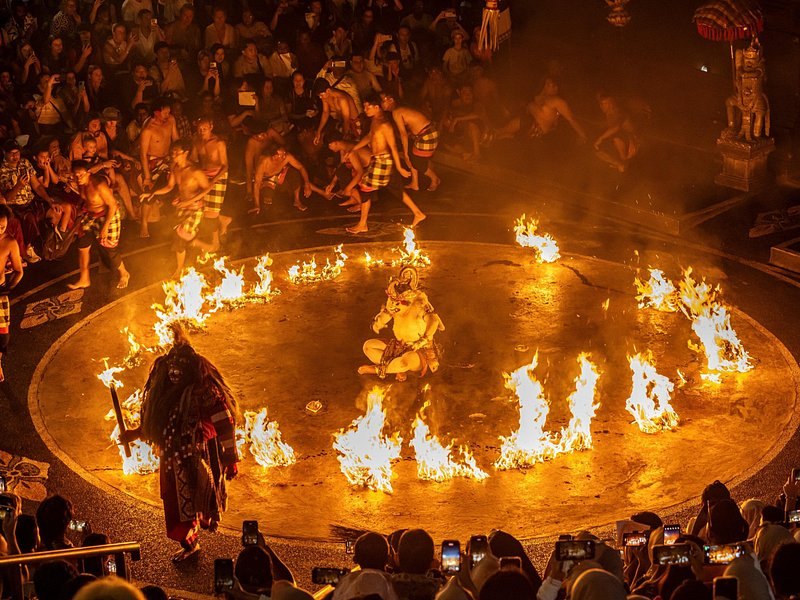
Uluwatu Temple Entry and Kecak Fire Dance Ticket
Both tickets bought for you and a guide waiting at the entrance. Two hours, no car.
From $28 per person
Check Availability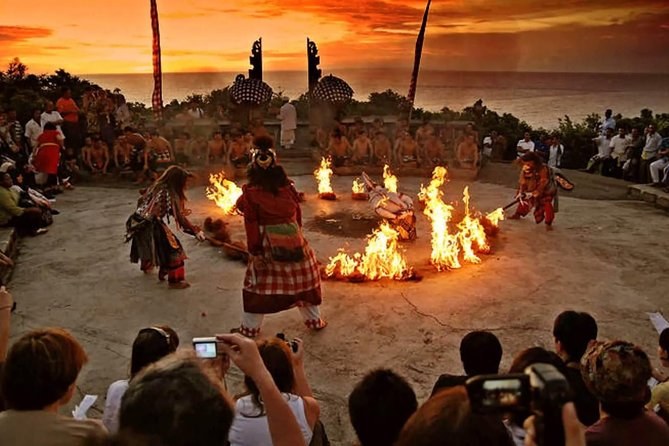
Private Uluwatu Sunset Tour with Kecak Dance and Dinner
Hotel pickup, an hour on the clifftop, the six o'clock dance and dinner at Jimbaran.
From $31 per person
Check Availability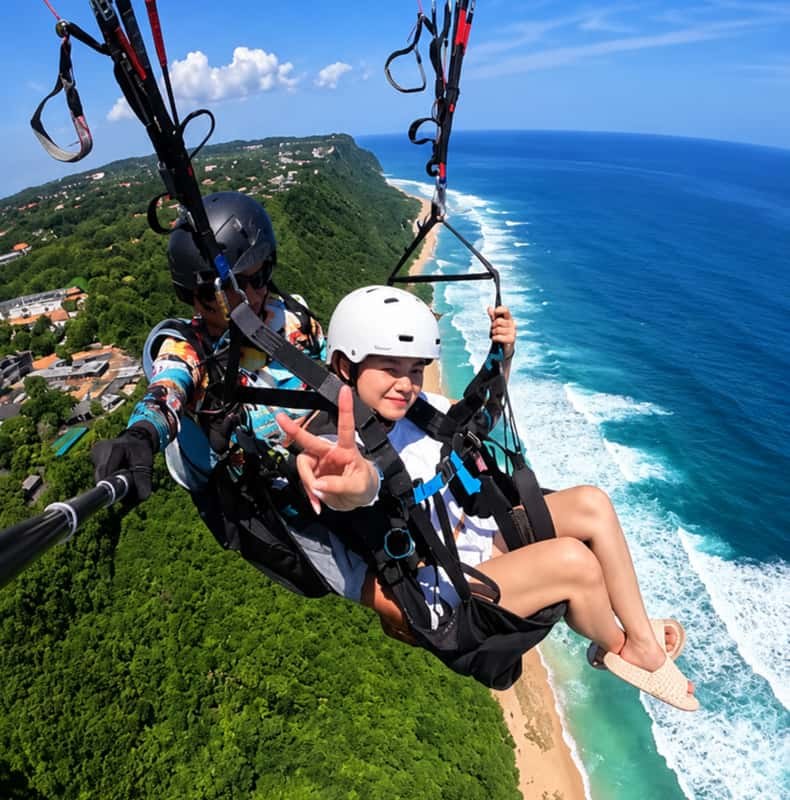
Paragliding Tandem Flight in Pandawa & Uluwatu with Pilot
A tandem flight over the cliffs with a certified pilot, priced per group of three.
From $35 per group, up to 3
Check Availability