One Day on the Bukit: An Uluwatu Itinerary, Hour by Hour
In short
Build the day backwards from six o'clock. Everything on the Bukit is within twenty-five minutes of the temple, so the plan is not about distance — it is about being through the gate by four, with the swimming already done and somewhere to have changed. Here is a day that works, hour by hour, and the three ways it usually unravels.
Why the day has to be planned backwards
Most Bali itineraries start in the morning and see where they get to. That does not work here, because the Kecak and Fire Dance starts at 18:00 and the seating is unreserved. The performance is the fixed point; everything else moves around it.
Work back from six and the shape falls out. A seat needs you in the amphitheatre by about half past four. The cliff path and the courtyards need an hour before that. Which means through the gate at four, which means the last beach stop finishes at half past three, which means lunch happens at one. From there the morning fills itself.
The day, hour by hour
| Time | Where | Why then |
|---|---|---|
| 08:30 | Pickup from your hotel | Ahead of the mid-morning traffic through Kuta |
| 09:30 | Water Blow, Nusa Dua | The swell is best in the morning and the site is quiet |
| 10:30 | Garuda Wisnu Kencana | Shade in the plaza corridors before the heat peaks |
| 12:30 | Lunch, at the statue or in Jimbaran | Eat before the beach, not after |
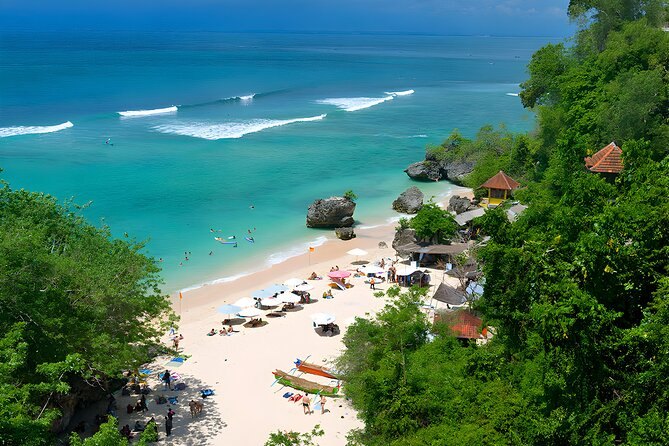
| 13:30 | Melasti or Pandawa Beach | Both have showers; this is where you swim |
| 15:30 | Leave the beach, changed and dry | The road south fills from four |
| 16:00 | Through the temple gate | Short queue, good light on the cliff path |
| 17:00 | Dance box office, then a seat | Upper northern rows, before the crush |
| 18:00 | Kecak and Fire Dance | The one performance the sunset lands in |
| 19:15 | Seafood on the sand at Jimbaran | Half an hour back, tables on the beach |
What is the morning actually for?
Two things worth doing and one worth skipping. The Water Blow at Nusa Dua is a gap in the limestone where the swell forces up as spray; it takes forty-five minutes and is best before the middle of the day. Garuda Wisnu Kencana is the cultural park under the 121-metre statue of Vishnu on the bird Garuda, and it is the one stop that genuinely needs more time than most itineraries give it.
What to skip on a day like this is a second temple. Tanah Lot is north-west, which is the wrong direction, and putting it in turns eight hours into twelve. That trade has its own guide.
Which beach should you swim at?
This is the decision that quietly ruins more Uluwatu days than any other, and the reason is facilities rather than sand.
| Beach | Access | Showers | Verdict for this day |
|---|---|---|---|
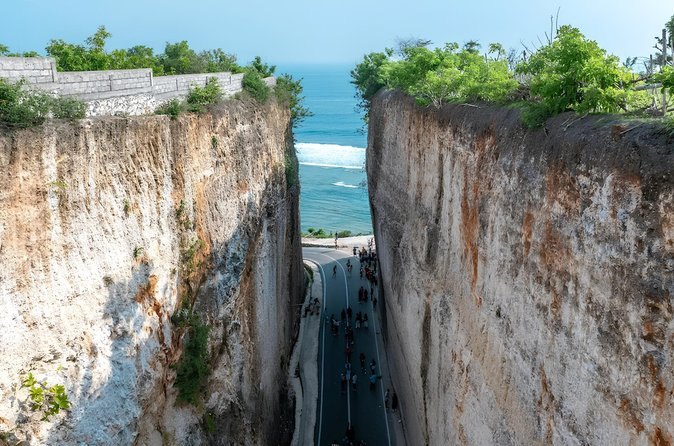
| Melasti | Road cut through the cliff | Yes | Best choice |
| Pandawa | Road cut through the cliff | Yes | Best choice |
| Padang Padang | Steps through a rock slot | Limited | Photogenic, short stop |
| Suluban | Steps and a cave passage | Limited | Tide-dependent |
| Nusa Dua | Flat, resort strip | Yes | Fine, but it is the wrong end |
Swim at Melasti or Pandawa. Both have a proper descent, both have showers at the bottom, and both put you twenty-five minutes from the temple gate. Photograph Padang Padang and Suluban on the way past. More detail on all of them is in things to do.
How much time does the temple itself need?
An hour, and no more, unless you want to sit on the cliff. That hour covers the candi bentar split gate, the outer courtyards, and the northern arm of the cliff path — which is the stretch with the view back at the temple and, because most of the crowd turns south toward the seats, the quiet one.
The walk itself is short and level for the first part, then uneven stone with a drop on the seaward side. Full detail on what you can and cannot enter is on Pura Luhur Uluwatu.
Where to sit, and when to get there
The amphitheatre is tiered stone facing west, and seating is first come, first served. The upper rows on the northern side are the ones to aim for: high enough to see over everyone, angled so the sun goes down behind the stage rather than into your eyes. Travellers name their guides for putting them exactly there.
Be in a seat by half past five at the very latest. In July and August, make it five.
Can you do this without a car?
The temple, yes. The day, not really. Ride-hail works fine for a single run down to Pecatu, and it thins out badly on the way back when several hundred people leave the amphitheatre at once. Chaining five stops together by app, with wet swimwear and a deadline, works far better with a car you have already arranged. Going it alone properly is covered in its own guide.
A shorter version, if you only have an afternoon
- 14:00 — pickup, straight to Padang Padang for an hour.
- 15:30 — on to the temple, through the gate by four.
- 17:00 — dance ticket, then a seat.
- 18:00 — the performance.
- 19:15 — dinner at Jimbaran, or straight home.
That is the shape of the evening runs, and it is about seven hours door to door.
What this day costs
Doing it independently: roughly IDR 210,000 a head at the temple for entry and a dance seat, plus entry at Garuda Wisnu Kencana, plus beach parking, plus a car for ten hours. As a booked full day with both temple tickets in the fare, from $20 per person.
The second number is lower than most people expect, which is why the full-day runs are the best value on this coast for a first visit. Fares are compared on Uluwatu Tours, and journey times on the map.
What to do with the morning if you start later
Not every day begins at half past eight. If you are starting at eleven, the version that works drops the Water Blow and gives the time to Garuda Wisnu Kencana instead, which is the stop that most rewards it. Two hours there, lunch at the park, one beach, and you are still through the temple gate by four.
What does not work is trying to keep all five stops in a shorter day. The captured itineraries that attempt it give Uluwatu forty minutes, and forty minutes on that clifftop means the courtyards and nothing else — no northern path, no time to stand still. If something has to go, drop a beach rather than the temple.
Eating, and where it goes wrong
Lunch at half past twelve, dinner after the performance. That is the whole rule, and the reason for it is that there is nowhere sensible to eat between four and seven: you are either walking the cliff or sitting in the amphitheatre.
The obvious dinner is Jimbaran Bay, half an hour back toward the airport, where the seafood grills put tables directly onto the sand. Several of these trips finish there. The alternative is one of the warungs above the temple car park before you go in, which is the better call with young children.
When to do it
Any month works; some work better. August and September are the driest and clearest, May puts the sunset closest to the six o'clock curtain, and December and January give you the latest sunsets of the year alongside the heaviest rain. The month-by-month picture, including the sunset time for each, is on weather. If you are choosing a trip, an Uluwatu tour Bali listing that refunds at 24 hours lets you book before the forecast is knowable.
Frequently asked questions
How early do I need to leave the beach?
Is one day enough for the Bukit?
Can I swim at Uluwatu Temple?
What time should lunch be?
Do I need to book the beaches?
Which trip follows this itinerary most closely?
Trips that run this day for you
Bali: Full-Day Private or Shared Uluwatu Highlights Tour
Five stops down the Bukit with temple and dance entry included, private or shared.
From $20 per person
Check Availability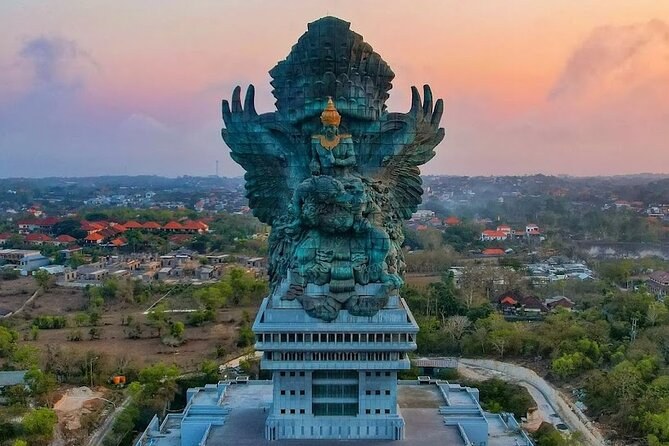
Full Day All Inclusive South Bali Uluwatu Private Tour
Three hours at Garuda Wisnu Kencana, lunch included, the fire dance to close.
From $75 per person
Check Availability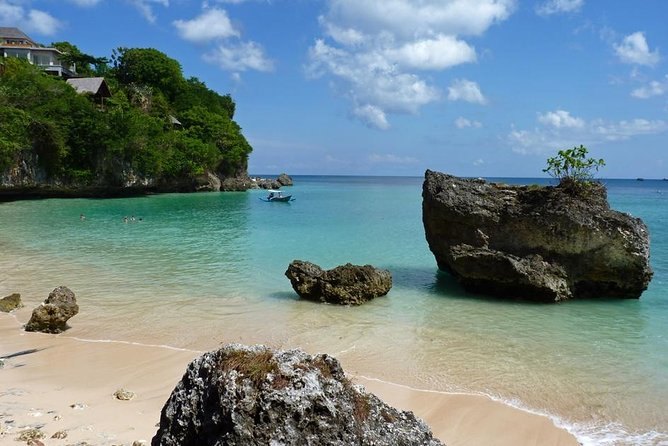
Bali Beaches Hopping - Uluwatu Temple
A swimming day across four beaches with two hours at the temple. Entry is extra.
From $32 per person
Check Availability