12 Facts About Uluwatu Temple That Will Surprise You
The short answer
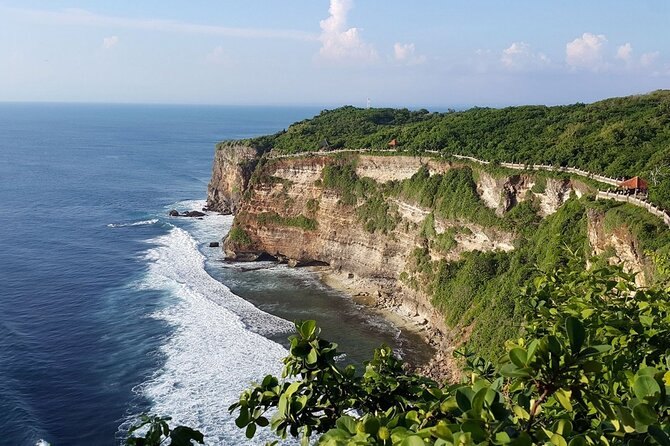
Uluwatu is one of six temples holding Bali's spiritual balance, a 16th-century priest chose the headland as the place to end his life, and the fire dance performed beside it every evening was invented in the 1930s and contains no gamelan at all. Here are twelve things about the place that most visitors never hear.
1. It is one of six, not one of many
Pura Luhur Uluwatu is a sad kahyangan temple — one of six sanctuaries placed around Bali to hold the island's spiritual balance, each associated with a direction. Uluwatu holds the southwest. It is a system covering the whole island rather than a scenic temple that happens to be old.
2. The name means the tip of the rock
Ulu is head or tip; watu is rock. It is a plain description of a headland, and it long predates anyone visiting it for the view. The surf break below took its name from the temple rather than the other way round, which is worth remembering when you hear the word used for a whole stretch of coast.
3. A priest chose it as the place to die
Dang Hyang Nirartha, a Javanese priest who reformed temples the length of Bali in the 16th century, selected this headland for his moksha — his release from the cycle of rebirth. That association is why the temple carries the honorific Luhur, meaning of divine origin.
4. The same priest is behind Tanah Lot
Nirartha is credited with founding Tanah Lot as well, up the west coast. It is the reason the two so often appear on the same itinerary, and it is a better reason than the one usually given, which is that both face west. Whether to do both in a day is the subject of its own comparison.
5. The origins are three centuries older than that
The site is traced to the 11th century and to Mpu Kuturan, the Javanese sage credited with shaping Balinese temple practice as it is still followed. Nirartha made it famous; he did not make it.
6. Almost nothing you see is original
The cliff is coral limestone, the air is salt and the sea is thirty metres below the wall. Carved stone here weathers fast. A working Balinese temple is repaired and rebuilt as a matter of course, so its age is a matter of continuous use rather than of surviving fabric.
7. The cliff was a reef
The whole Bukit Peninsula is raised coral limestone — a reef that came out of the water. That is why the rock is pale and porous, why it is full of shell, and why the sea is steadily undercutting the base of the cliff seventy metres below the temple.
It also explains something visitors notice and rarely ask about: there is almost no surface water anywhere on the Bukit. Limestone drains. That is why the peninsula was the last part of southern Bali to be developed, and why it has no rice terraces when the rest of the island is full of them.
8. The fire dance is younger than most visitors' grandparents
The Kecak was created in the 1930s by the Balinese dancer Wayan Limbak working with the German painter Walter Spies. They adapted the Sanghyang, a trance ritual, into a staged telling of the Ramayana for an audience. It is genuinely Balinese and it is genuinely modern, and both facts are usually left out.
9. There is no gamelan in it
Balinese performance almost always means a gamelan orchestra. The Kecak has none. The chorus of men chanting cak in interlocking rhythm is the orchestra, which is why it sounds unlike anything else you will hear on the island.
10. The performance is beside the temple, not in it
The amphitheatre is a separate open-air theatre cut into the cliff a short walk south of the gate, with its own box office and its own ticket. Plenty of people book what they think is a temple tour and are surprised to be buying two things. Both, and what each fare covers, are set out on visitor information.
11. The monkeys have a trade
The long-tailed macaques on the headland are wild, unfed by staff, and unusually good at what they do. There is a well-documented pattern of an animal taking an object — glasses, a hat, a phone — and releasing it in exchange for food. Knowing that is mostly useful so you understand what is happening rather than panicking.
12. Its birthday moves
The temple's piodalan runs on the 210-day Balinese pawukon calendar, not the Gregorian one, so it comes round roughly every seven months and lands on a different date each year. If you arrive on one, the site fills with families in ceremonial dress and the afternoon is a completely different thing.
| Fact | The figure |
|---|---|
| Height above the sea | About 70 metres |
| Origins | 11th century |
| Nirartha's era | 16th century |
| Kecak created | 1930s |
| Sad kahyangan temples | Six, island-wide |
| Temple anniversary cycle | Every 210 days |
A note on the ones you will not find here
Two claims circulate about Uluwatu that are worth treating carefully: a specific founding year, and a dramatic origin story for the monkeys. Neither stands up to a source you can point at. What follows is what does.
And one that is not true
You will read that the temple is closed to non-Hindus. It is not. The innermost courtyard is reserved for worshippers at prayer, exactly as it is at every Balinese temple, and everything else — the gate, the outer courtyards, the cliff path in both directions — is open to anyone who pays at the window and covers their knees. The confusion is worth clearing up, because it puts people off a visit that is entirely open to them.
Where to hear the rest of it
None of the above is written on a sign at the gate. The guided runs are where it gets told, and the ones that begin at the entrance put someone beside you for the walk. More background sits on Pura Luhur Uluwatu, and if you are choosing a trip, start with an Uluwatu tour Bali listing and read what each fare covers.
None of this is on a sign. The guided runs are where it gets told; the fares are set out on Uluwatu Tours.
Where the story gets told on the spot
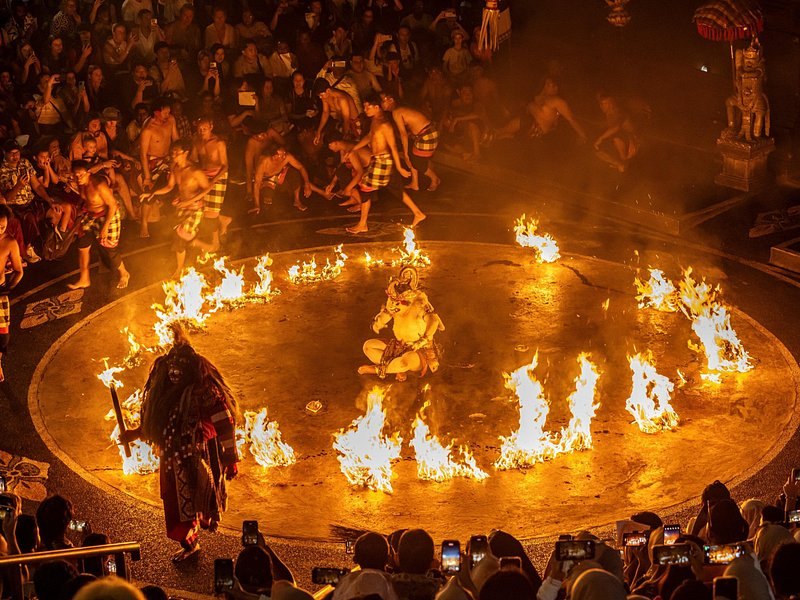
Uluwatu Temple Entry and Kecak Fire Dance Ticket
Both tickets bought for you and a guide waiting at the entrance. Two hours, no car.
From $28 per person
Check Availability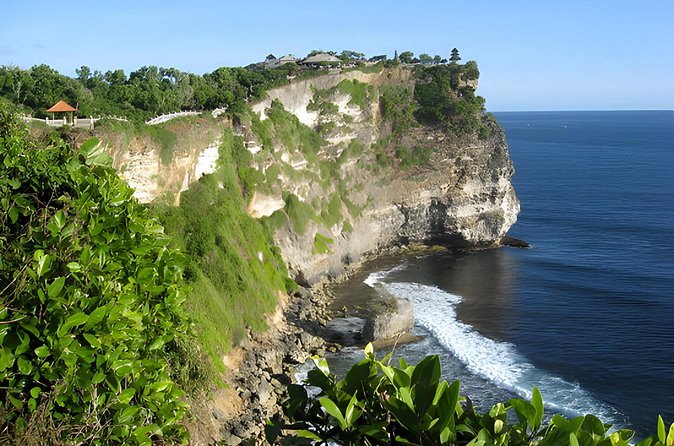
Uluwatu Sunset Tour: Kecak and Fire Dance with Jimbaran Dinner
Every ticket and the seafood dinner in one fare, with two unhurried hours at Jimbaran.
From $65 per person
Check Availability